
The Vibrant Machines
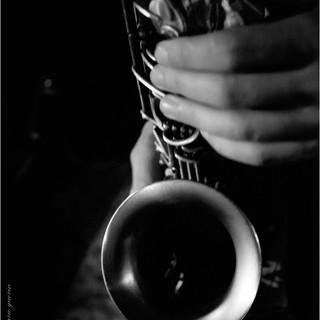
The Vibrant Machines : quand la musique rencontre Jean Tinguely

The Vibrant Machines is a musical project born from a simple yet profound desire: to make the spirit of Jean Tinguely resonate through sound. More than a tribute, it is an attempt to enter into dialogue with his work, his way of thinking, his humour, his freedom, his poetry of movement, and his fascination with useless, unstable, noisy, fragile, and living machines.
For a long time, Tinguely’s world has inhabited me. There is something deeply musical in his work: repetition, collision, malfunction, a play with chaos, the acceptance of unpredictability, the beauty of what trembles. His sculptures are never merely objects. They breathe, creak, spin, stumble, become excited, and sometimes fall apart. They have a dramaturgy. They have a rhythm. They almost already contain a score.
With The Vibrant Machines, I wanted to extend that world into an ensemble where jazz, improvisation, sound poetry, contemporary textures, and hybrid scores could coexist. The idea is not to illustrate Tinguely, nor to “translate his sculpture into music” in a literal way. Rather, it is to let his work permeate the writing, the listening, the shape of the pieces, the behaviour of the group on stage, and even the way sounds emerge, repeat, warp, or destroy themselves.
A music between structure and accident
This project is built on a tension that feels deeply Tinguely-like to me: the tension between strong organization and an always unstable result. Some pieces are written with precision, while others leave a great deal of space for chance, the layering of cells, collisions of materials, and the reactions of the musicians to one another. The scores may be classical, but they may also be graphic, open, and shaped by systems of play that allow each performance to become a living form, never entirely fixed.
This is probably where the heart of the project lies: in making heard a music that is structured, yet never closed. A music that accepts losing a little control in order to become more organic. A music in which repetition is not merely mechanical, but traversed by human energy, breath, humour, imbalance, and sometimes violence.
An ensemble imagined as a sensitive machine
The ensemble of The Vibrant Machines brings together musicians coming from jazz, improvisation, contemporary music, and more transversal approaches. This diversity is essential. It allows the musical material to be approached as a space of experimentation, where timbres, attacks, frictions, and instrumental gestures become almost sculptural.
In this music, sound is not merely a harmonic or melodic flow. It becomes matter, friction, traction, percussion, breath, resistance. I am drawn to the idea that a group can function like a poetic machine: not a cold mechanism, but a collective organism in which each element acts upon the others, pushes them, reactivates them, unsettles them, and throws them out of joint.
The pieces: three gateways into the world of the project
Jean sait Siffert
Jean sait Siffert explores the relationship between Jean Tinguely and racing driver Jo Siffert, as well as their shared connection to speed. It is a piece driven by the ideas of acceleration, compression, and propulsion. The musical material works with an almost automotive energy: tense motifs, repeated impulses, a sensation of racing, pressure, and thrust.
What interested me here was capturing something of speed as a modern obsession, but also as vertigo. The theme is conceived as something initially tightened and compressed, then gradually expanded, as if the sonic material were gathering momentum or exploding from within. The central improvisation is inspired by the sound of motor racing, by its nervous tension, its aggression, but also by its absurd beauty. One hears in it a fascination with movement, but also a form of saturation with the world.
Une Folie du Dernier Cri
With Une Folie du Dernier Cri, I wanted to approach another dimension of Tinguely: his link to disorder, excess, and fertile unreason. This piece takes the form of a vocal composition inhabited by a poem I wrote about madness. Here, madness is not understood as a mere loss of control, but as a space of rupture, of tipping over, of opening toward another reality.
The text summons images of ravines, storms, tumult, and thought plunging into deep waters. There is in this piece something more inward, more troubled, perhaps more nocturnal. The music seeks a point of balance between fragility and excess, between lyrical impulse and strangeness.
I like to think of this piece as a song born from a crack: a voice that wavers, yet finds in that very instability a form of truth. It is also a way of reminding us that Tinguely’s work, despite its humour and its spectacular dimension, often touches on much deeper zones: anguish, absurdity, the human condition, and the beauty of what escapes control.
A Star for a Bar
A Star for a Bar begins from one of Tinguely’s most radical ideas: the self-destructing work of art, recalling his Homage to New York. This piece is inspired by that famous ephemeral and destructive work, and by the symbolic power of such a gesture. To compose from this idea was to confront an essential question: how can music destroy itself while still remaining perceptible as form?
I chose to begin with a rather classical type of writing, at times almost rooted in a reference to early swing, and then to submit it to a logic of wear, repetition, and erosion that gradually undoes it. The piece unfolds like an identifiable form, then little by little cracks, erodes, and derails, until something else begins to appear: a field of sonic ruins, a beauty of chaos, a progressive disappearance of the initial order.
For me, this piece speaks of destruction as an aesthetic event. Not destruction for its own sake, but destruction as revelation. Sometimes a form has to break in order for something else to appear.
An open work
What matters to me in The Vibrant Machines is that each performance remains different. The systems of writing, the materials, the improvised gestures, and the collective listening ensure that the pieces never repeat themselves in exactly the same way. That is essential: Tinguely teaches us precisely that a living machine is never a perfectly controlled machine. It derails, it surprises, it overflows its own program.
In that sense, the project is not seeking polished perfection. It seeks the right tension: the moment when a form still holds, while already being threatened. The moment when repetition becomes trance, when sound becomes object, when the group becomes a temporary sculpture.
Why this project today?
In a world often obsessed with optimization, useful speed, profitability, and technical efficiency, Tinguely’s art remains profoundly liberating. It reminds us that uselessness can be essential. That play can be a form of thought. That movement can produce poetry. That the ephemeral can leave a lasting trace. That chaos is not always a failure, but sometimes an opening.
The Vibrant Machines modestly tries to extend that into music: to create a space where we listen differently, where unpredictability is welcomed, where sounds are not simply there to “make things beautiful,” but to invent an experience. An experience that can be funny, strange, rough, or unsettling, but is always inhabited by the same question: how can we bring the machine to life without taking away its mystery?
In sound, in images, in motion
This project continues to transform itself. It feeds on concerts, rehearsals, images, videos, attempts at writing, happy accidents, and new encounters. Like Tinguely’s works, it does not seek to be fixed once and for all. It seeks to remain in motion.
The Vibrant Machines is, then, a music of collision, repetition, breath, fertile disorder, and mechanical poetry. A way for me to thank Jean Tinguely, not by freezing him into a museum-like tribute, but by allowing his spirit to set music in motion once again.


Comments